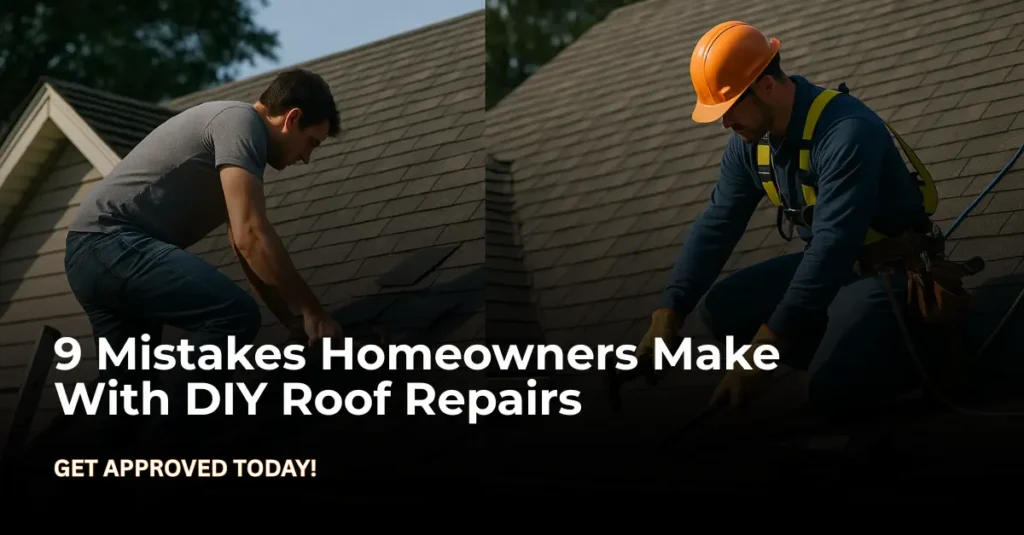
9 Mistakes Homeowners Make With DIY Roof Repairs
kaye mori • October 15, 2025

October 15, 2025

DIY Roof Repair

Granules in Gutters: Subtle Signs of Roof Damage

Many homeowners try DIY roof repair to save money, skip contractor wait times, or feel accomplished. While the motivation is understandable, the risks of amateur roof fixes often outweigh the benefits.

Homeowners often underestimate:

  • The complexity of modern roofing systems
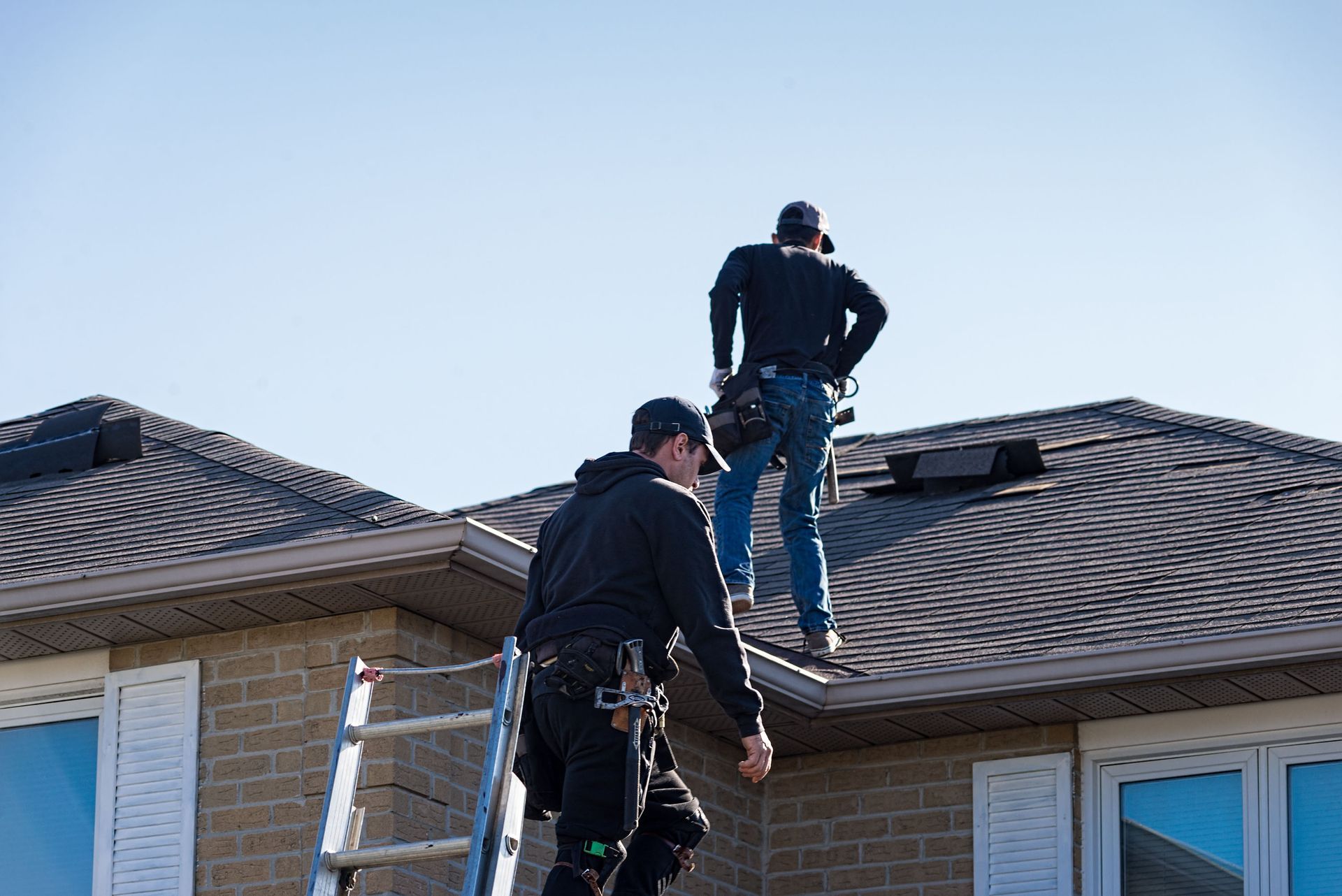
  • The safety hazards involved with roof slopes
  • The long-term costs of improper repairs
  • The potential to void insurance claims

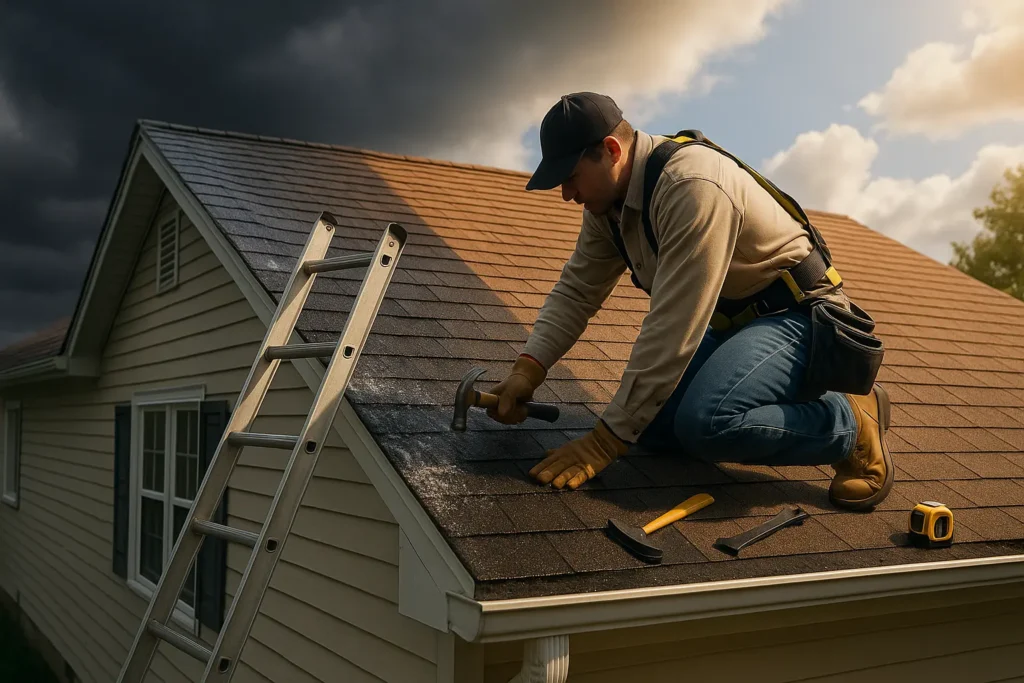
DIY repairs can lead to rain damage, attic leaks, mold growth, or worse—roof collapse. Without proper training, even small fixes like replacing shingles or applying sealant can escalate into costly structural problems.

In this guide, you’ll learn the 9 most common errors homeowners make during DIY roof repairs and how to avoid them.

1. What Safety Mistakes Do Homeowners Make With DIY Roof Repairs?

Answer: Homeowners often skip critical safety measures, leading to injuries and fatalities.

Common DIY Roofing Dangers:

  • No fall protection system (e.g. roof harness, anchor points, edge guards)
  • Unsafe ladder placement and poor ladder quality
  • Working alone or during windy or wet conditions
  • Ignoring roof pitch and slip hazards
  • Inadequate footwear for traction

OSHA reports over 6,000 roofing-related injuries annually in the U.S., many from residential falls.

Essential Roof Safety Gear:

Tool/Item
Purpose

Roof harness system

Fall protection

Roof anchor & rope

Stability on steep slopes

Ladder stabilizer

Prevent tipping

Edge guard rails

Minimize risk of falls

Anti-slip boots

Improve footing on shingles

Working at height requires caution, especially on steep-pitched roofs. If you’re unsure how to secure yourself, hire a licensed roofing contractor instead.

2. What Happens When You Misdiagnose a Roof Problem?

Answer: Misdiagnosing leads to surface-level repairs that miss the root cause, making the issue worse.

Common Misdiagnosis Scenarios:

  • Patching a leak without checking for rotted decking
  • Ignoring signs of water infiltration in the attic
  • Sealing shingles without inspecting flashing corrosion

Signs of Deeper Roof Damage:

  • Ceiling stains or soft drywall
  • Wet insulation in attic corners
  • Black mold or mildew odor
  • Spongy roof decking underfoot
  • Flashing gaps or rust around penetrations

Amateur inspections often miss damage under the surface. Without proper diagnosis, a temporary fix may fail in weeks.

3. Why Do the Wrong Materials Cause Roofing Failures?

Answer: Incompatible materials break down prematurely or fail to seal properly.

Examples of Material Mistakes:

  • Using asphalt sealant on metal roofing
  • Installing tar paper under synthetic shingles
  • Applying general caulk instead of roofing-grade adhesive

EPDM rubber membranes, asphalt shingles, and metal flashing all require specific, compatible sealants and underlayments.

Risks of Using the Wrong Roofing Supplies:

Wrong Material
Resulting Problem

Mismatched shingle types

Poor adhesion, water seepage

Generic sealant

Cracking in heat, failure to bond

Heavy shingles on weak deck

Structural sagging or leaks

Before buying DIY roofing supplies, check your roof type and climate. Incompatible repairs can cost more to reverse than to replace professionally.

4. What DIY Roof Repair Installation Techniques Lead to Roof Failure?

Answer: Improper installation often causes early leaks, wind damage, and shingle detachment.

Common Installation Errors:

  • Incorrect nail placement—too high, too few, or angled
  • Missing starter strips or drip edges
  • Reversed or overlapping flashing
  • Improper ridge cap or ventilation paths

Misplaced nails can lead to shingles lifting in the wind, allowing moisture to reach the decking.

Installation Oversights to Watch For:

Error
Consequence

No underlayment

No barrier against water intrusion

Poor shingle alignment

Water channeling under tiles

Loose flashing

Water leaks at chimney or vents

Even minor roof alignment issues can compromise an entire section, especially around valleys, eaves, or penetrations.

5. Is It Legal to Repair Your Own Roof Without a Permit?

Answer: Most local codes require permits for major roof work; skipping them can void insurance or affect resale.

Why DIYers Skip Permits:

  • Don’t know local code
  • Want to avoid permit fees
  • Assume repairs are “minor”

Some HOAs also require notification or approval for roof color, material, or scope changes.

Consequences of Illegal Roof Work:

  • Code violations
  • Denied home insurance claims
  • Failed home inspections
  • Fines or forced rework

Always check with your city’s permit office or local building authority before starting roof repairs.

6. How Does Weather Impact DIY Roof Repairs?

DIY Roof Repair

Answer: Weather affects everything from sealant curing to shingle adhesion and safety.

Weather-Related DIY Roofing Issues:

  • Rain during repair can trap moisture
  • Cold weather causes shingles to crack
  • Excessive heat softens underlayment or warps materials

DIY Roof Repair Timing Tips:

  • Monitor dew points, not just temperature
  • Use rain tarps if weather shifts mid-repair
  • Never work on roofs in wind over 20 mph

Roofing sealants need 24-48 hours of dry weather to cure. Moisture exposure can lead to adhesion failure.

7. Why Is Ventilation Often Ignored in DIY Roof Repair?

Answer: Many homeowners focus only on the roof surface, ignoring airflow in the attic below.

Signs of Poor Roof Ventilation:

  • Condensation on rafters
  • Black mold on attic insulation
  • Extreme heat buildup under roof
  • Ice dams forming in winter

Proper ventilation requires both intake vents (like soffit vents) and exhaust vents (like ridge or gable vents).

Ignoring the ventilation path traps moisture, degrades materials, and leads to structural rot.

8. Should You Inspect Your DIY Roof Repairs?

Answer: Yes, because a missed crack or misaligned shingle can still cause long-term damage.

DIY Inspection Checklist:

  • Use a thermal imaging camera to detect cold spots
  • Run a drip test using a garden hose
  • Check inside the attic for water trails
  • Look for soft spots on the roof surface

Post-repair inspections are often skipped, yet they’re critical for verifying the effectiveness of the fix.

Double-check your work within 24 hours, and again after the next rain event to confirm leak-proofing.

9. What Hidden Costs Do DIY Roofers Forget?

Answer: DIY roof repair often costs more than expected due to unplanned expenses.

Commonly Missed DIY Roof Repair Costs:

  • Tool rentals (nail guns, ladders, sealant guns)
  • Safety gear (harnesses, boots, gloves)
  • Disposal fees (old shingles, tarp, nails)
  • Extra materials from incorrect estimates
  • Second trips to the hardware store

Many DIYers buy shingle bundles multiple times due to incorrect measurements or cutting errors.

Budget Example for a 100 sq. ft. Repair:

Expense

Estimated Cost

Shingles (3 bundles)

$100

Underlayment & sealant

$60

Safety equipment rental

$75

Disposal bin

$120

Tool purchase/rental

$100+

Total

$455+

Saving on labor costs can backfire if repairs fail and lead to bigger issues like interior water damage or mold remediation.

A white checkmark icon centered on a square, green background.Frequently Asked Questions (FAQ)

DIY Roof Repair
Can I do a DIY roof repair?

Yes, small repairs like replacing a few shingles or clearing a blocked vent are manageable, but full roof replacements or structural fixes should be left to professionals due to safety and skill requirements.

What is the most common DIY roof repair mistake?

Ignoring safety precautions is the most common. Most injuries occur due to lack of harnesses or slipping on wet or steep roofs.

How much money can DIY roof repair save?

DIY may save $1,000–$3,000 on labor for minor fixes, but improper repairs can cost double that in damage or rework.

When should I not attempt DIY roof repair?

Avoid DIY roofing if the roof is steep, the damage is structural, permits are needed, or if weather conditions are unsafe. Always consult a contractor when in doubt.

Is a permit needed for DIY roof repair?

Yes, in most municipalities. Even patch jobs may require a permit if they exceed a certain size or involve replacing structural components.

Want More High-Quality Roofing Projects on Long Island?

G&V Roofing delivers trusted craftsmanship, reliable service, and local expertise that turns property owners into lifelong clients—all from one professional source.

Our Services:

A hammer with a gray steel head and an orange handle, shown on a white background. Slate Roofing— Elegant, long-lasting, and perfect for upscale homes.
A flat, grey icon of a classical building with three pillars, representing a bank or government institution. Tile Roofing— Durable and stylish roofing built to handle the Northeast climate.
A simple icon of a two-story yellow house with a grey roof, blue windows, a brown door, and a red chimney on a green lawn. Residential Roofing— From repairs to full replacements, we protect your home like it’s our own.
A flat-style icon of a tan government building with tall blue windows and a central tower. Commercial Roofing— Professional-grade roofing systems for businesses and facilities.
A simple, flat, light blue water drop icon. Gutters— Proper drainage solutions to protect your foundation and landscaping.
A square window with a brown frame divided into four equal panes by a crossbar, showing a light blue reflection. Windows Energy-efficient and beautiful—enhance your view and lower utility bills.
A terracotta-colored rectangular brick with three circular holes arranged in a line on its top surface. Siding— Boost curb appeal and protect your exterior with high-performance materials.

Learn About:

A white checkmark centered on a rounded square background of medium green.  Choosing the Right Roofing Materials for Long Island Homes
A white checkmark centered on a rounded square background of medium green.  Roofing Tips for Nassau & Suffolk County Weather
A white checkmark centered on a rounded square background of medium green.  How to Spot Roof Damage Before It Becomes Expensive
A white checkmark centered on a rounded square background of medium green.  The Real Cost of Delaying Roof Repairs
A white checkmark centered on a rounded square background of medium green.  Seasonal Roof Maintenance Checklists

A simple icon of a two-story beige house with a grey roof, red chimney, blue windows, and green landscaping.Looking to Upgrade Your Roof or Protect Your Property Investment?

Whether you’re a homeowner looking for reliable roof solutions or a property manager seeking fast, expert repairs—G&V Roofing is your go-to Long Island partner for long-lasting protection and peace of mind.

A red pushpin with a silver metal tip, depicted at an angle on a white background.Follow Us for the Latest in Roofing Care, Property Protection & Home Improvement:

A light blue music note symbol on a white background. Tiktok : Watch fast transformations, tips from the crew, and roofing secrets revealed
A dark grey, flat-style icon of a vintage-style movie camera with two reels on top. YouTube: Explore step-by-step guides, customer stories, and full project showcases
A dark grey camera icon featuring a blue lens and a bright orange starburst graphic representing a flash. Instagram: See beautiful before-and-afters, behind-the-scenes content, and premium materials
A yellow thumbs-up emoji on a white background, representing approval or agreement. Facebook: Read reviews, see featured jobs, and connect with the local G&V Roofing community

A stylized yellow hand icon pointing to the right.Contact G&V Roofing today and discover why craftsmanship matters
By kaye mori January 14, 2026
What are house siding panels, and why are they important?House siding panels protect exterior walls from moisture, pests, and environmental exposure. They also boost curb appeal and improve a home’s energy efficiency through insulation and thermal resistance. Common House Siding Panel Types and Their Characteristics Siding Type Material Lifespan Maintenance Level Key Features Vinyl PVC-based […]
By kaye mori January 14, 2026
Learn how house siding prevents moisture damage by forming a durable barrier that safeguards your home’s structure, boosts energy efficiency, and supports healthier indoor air. How Does Moisture Affect Your Home’s Structure? Moisture infiltrates the building envelope and causes: Wood rot in structural framing Insulation saturation, reducing thermal performance Degradation of drywall and flooring materials […]
By kaye mori January 14, 2026
Preventative roof maintenance refers to the proactive approach of regularly inspecting and servicing commercial roofing systems to identify and fix minor issues before they escalate into costly problems. Unlike reactive repairs, which are performed after visible damage or leaks occur, preventative roofing maintenance is structured and scheduled and aims to preserve the roof system components […]
Show More →