3 Common Types of Roofing Explained—Pick the Right One for Your Home
kaye mori • July 24, 2025

July 24, 2025

types of roofing

The types of roofing determine how well a home withstands weather, maintains energy efficiency, and aligns with architectural style. Your roof must comply with building codes and support durability, waterproofing, and insulation needs. Climate, budget, and design are critical decision factors.

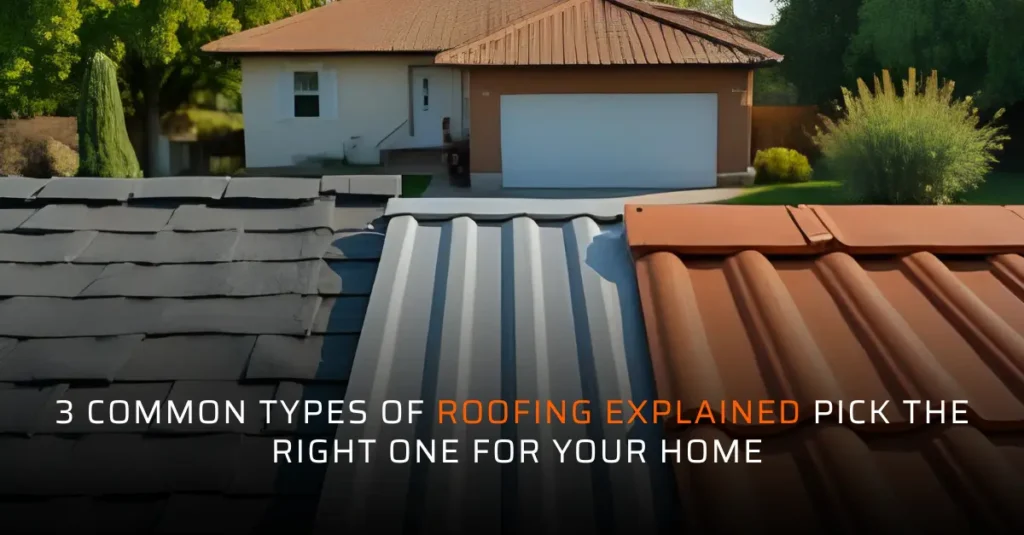
There are dozens of roofing material types, but most homeowners compare three: asphalt shingles, metal roofing, and clay or concrete tiles. Below, we explain each type to help you make a smart, value-driven choice.

What Are Asphalt Shingles, and Why Are They So Popular?

Asphalt shingles dominate residential roofing in North America. Over 70% of homes have this roof type due to its low upfront cost and simple installation process.

Types of Roofing ( Asphalt)

Type
Description
Lifespan

3-Tab Shingles

Flat, uniform look with single-layer design

15–20 years

Architectural Shingles

Thicker, dimensional appearance; better performance

25–30+ years

Pros of Asphalt Shingles

  • Affordable: Average cost $3.50–$5.50 per sq. ft.
  • Easy to install and replace
  • Compatible with various roof slopes
  • Wide style and color options

Cons

  • Shorter lifespan than premium materials
  • Vulnerable to high winds and hail
  • Can absorb heat if not reflective

Technical Details

  • Installed over underlayment
  • Includes starter strips and sealant strips
  • Proper nailing patterns improve wind resistance
  • Warranties vary from 20 years to a limited lifetime

Asphalt roof types are best for budget-conscious homeowners who want fast installation with decent durability.

Next, we look at a stronger, longer-lasting roofing material.

Why Are Metal Roofs Considered a Smart Long-Term Investment?

Metal roofing systems are growing in popularity due to their long lifespan, energy efficiency, and minimal maintenance.

Common Types of Roofing (Metal)

Type
Description
Lifespan

Standing Seam

Vertical panels with concealed fasteners

40–70 years

Corrugated Panels

Wavy design, visible fasteners

30–45 years

Metal Roofing Materials

  • Steel roofing (galvanized or Galvalume)
  • Aluminum roofing (lightweight, corrosion-resistant)

Benefits

  • Reflects solar heat → Reduces energy bills
  • Fire-resistant and durable
  • Works well in snow and high-wind regions
  • Compatible with solar panels

Considerations

  • Higher upfront cost ($8–$14 per sq. ft.)
  • Noise during rain unless insulated
  • Thermal expansion must be managed via clips and fasteners

Standing seam types are common on modern and high-end homes. Steel vs aluminum roofing depends on coastal exposure and structure load limits.

Next, we explore traditional, heavy-duty options found in Mediterranean and Spanish-style homes.

What Makes Clay and Concrete Tiles Durable and Stylish?

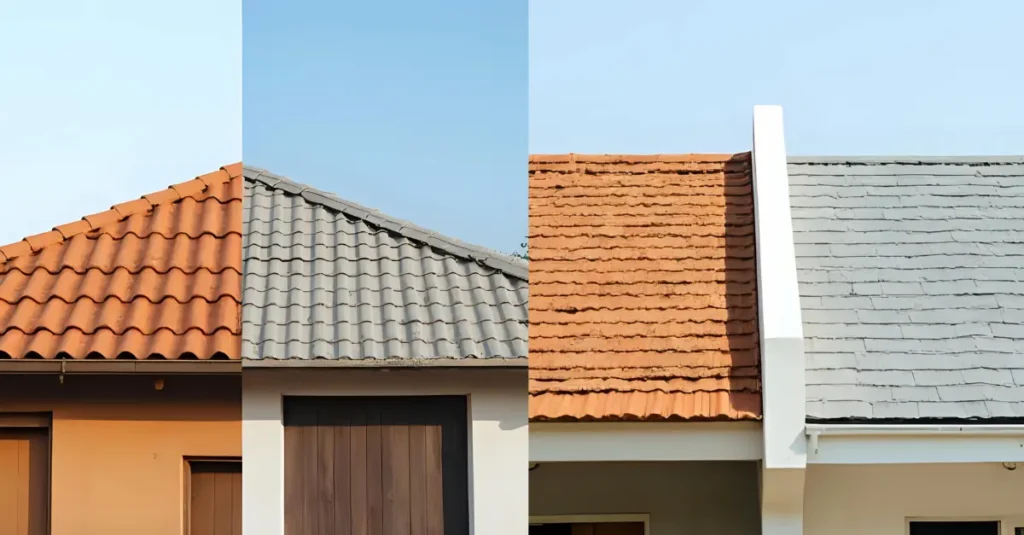
types of roofing

Tile roofing is favored for its weather resistance and visual impact. It fits Mediterranean, Spanish, and Southwest-style homes.

Types of Roofing (Tile)

Material
Appearance
Weight
Lifespan

Clay Tiles

Natural terracotta look

Heavy

50–100 years

Concrete Tiles

Can mimic slate or wood

Heavier

40–75 years

Benefits

  • Fire- and hail-resistant
  • Requires little maintenance
  • Environmentally friendly materials
  • Withstands extreme sun and rain

Limitations

  • High roof weight rating required
  • Fragile under impact if walked on
  • Expensive ($10–$20 per sq. ft. installed)

Types of Roofing Components

  • Laid on battens
  • Sealed with mortar adhesion
  • Needs drip edges, roofing felt, and proper tile overlap

Spanish types of roofing are iconic and durable but may need structural reinforcements.

Next, we highlight natural and rustic roofing for eco-minded or heritage-focused homeowners.

Is Wood Roofing Still a Good Option Today?

Wood shingles and shakes offer rustic charm and natural aging that blends into forest or cabin-style settings.

Wood Roofing Variants

Type
Description
Appearance

Wood Shingles

Machine-cut, uniform shape

Smooth, tidy

Wood Shakes

Hand-split, textured look

Rustic, uneven

Wood Materials

  • Cedar shingles and redwood shakes are popular
  • Can be pressure-treated for fire and insect resistance

Pros

  • Aesthetic fit for historic or rural homes
  • Natural insulator with good ventilation
  • Biodegradable and sustainable sourcing options

Cons

  • Requires regular maintenance and treatment
  • Fire risk unless treated
  • Vulnerable to mold and insect damage

Technical Notes

  • Key factors: butt thickness, exposure lines, ventilation space
  • Fire-retardant chemicals and treatment methods are often required

Wood types of roofing appeal to those valuing tradition and eco-materials.

Now, we explore the pinnacle of longevity in residential roofing.

Why Is Slate Roofing Considered High-End?

Slate roofing is among the most prestigious and longest-lasting roof options available.

Types of Roofing ( Slate )

Slate Type
Description
Lifespan

Natural Slate

Quarried stone; unique patterns

75–150+ years

Synthetic Slate

Made from rubber or composites

40–60 years

Key Benefits

  • Highest resistance to fire, water, and weather
  • Extremely low maintenance
  • Increases home resale value

Cost and Concerns

  • High cost ($15–$30 per sq. ft.)
  • Requires reinforced roof framing due to weight
  • Skilled installation needed

Technical Features

  • Proper headlap, nail hole alignment, and slate gauge are essential
  • Uses copper fasteners and heavy-duty flashing systems

Slate tile options are ideal for heritage homes and long-term ownership.

If you’re building modern or commercial spaces, consider flat roof systems next.

What Are the Most Common Flat Roof Systems?

Flat roofs are common in commercial buildings and minimalist home designs with low-slope requirements.

Flat Types of Roofing

Material
Description
Use Case

TPO (Thermoplastic)

Heat-reflective, UV-resistant membrane

Energy-saving

EPDM

Rubber membrane, flexible

Budget-friendly

BUR (Built-Up)

Multi-layer asphalt and gravel

Long lifespan

Modified Bitumen

Reinforced asphalt sheets

High durability

Advantages

  • Easier to install HVAC units and solar panels
  • More accessible for inspections and repairs
  • Economical for large surface areas

Considerations

  • Prone to ponding without proper drainage pitch
  • Must include vapor barriers, insulation boards, and sealed membrane seams

TPO vs. EPDM decisions often come down to budget, UV exposure, and expected longevity.

We now look at roofing types built for environmental performance.

What Are Green and Living Roofs?

types of roofing

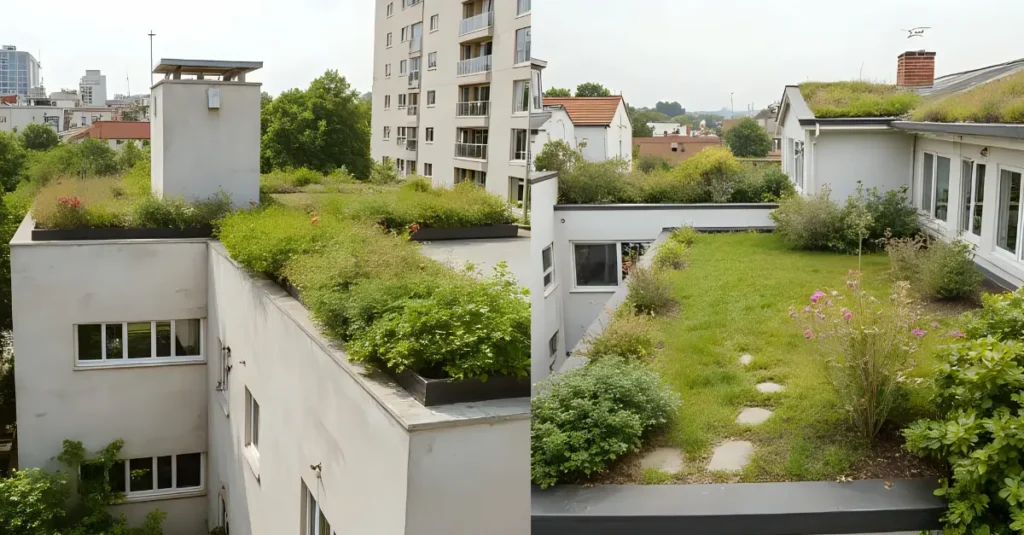
Green roofs are vegetated roof systems that provide sustainable and eco-friendly solutions, especially in urban environments.

Green Types of Roofing Systems

Type
Soil Depth
Maintenance
Ideal Use

Extensive

2–6 inches

Low

Homes and retrofits

Intensive

6+ inches

High

Parks, commercial spaces

Key Components

  • Water retention mats
  • Root barriers
  • Drainage layers
  • Geotextile fabrics

Advantages

  • Insulates buildings
  • Reduces urban heat
  • Absorbs rainwater and improves air quality

Challenges

  • Requires structural support for extra weight
  • Needs irrigation and maintenance planning

Vegetated types of roofing are ideal for sustainable buildings or LEED-certified projects.

Let’s now compare the three most common roof types side-by-side.

Asphalt vs. Metal vs. Tile: What Are the Best Types of Roofing for You?

Feature
Asphalt Shingles
Metal Roofing
Clay/Concrete Tile

Cost per sq. ft.

$3.50–$5.50

$8–$14

$10–$20

Lifespan

15–30 years

40–70 years

40–100 years

Weight

Light

Medium

Heavy

Climate Resistance

Moderate

High

Very High

Maintenance

Moderate

Low

Low

Aesthetics

Versatile

Modern, sleek

Mediterranean, rustic

Asphalt is ideal for affordability.
Metal excels in longevity and efficiency.
Tile offers unmatched durability and aesthetic value.

Now, how do you choose the right one?

How to Choose the Best Types of Roofing for Your Home

Homeowners should consider these five main factors:

  1. Budget— Total cost including materials and labor.
  2. Architectural Style— Match the roof type to the home’s design.
  3. Climate— Factor in rain, snow, hail, wind, and heat.
  4. Local Building Codes & HOA Rules— Some materials may be restricted.
  5. Long-Term Goals— Will you sell or stay for decades?

Consult a Roofing Contractor

  • Verify their license and insurance
  • Ask about energy bill savings and insulation factors
  • Ensure they understand local load-bearing and roof pitch specs

Once you’re clear on your goals, you can confidently pick the right roof.

Final Thoughts: Ask a Local Roofing Pro

Your types of roofing protects everything under it. Whether you’re focused on cost, climate resilience, or design appeal, the right roofing choice depends on your unique situation. A certified local roofing contractor can offer a site-specific assessment and guide you to the best decision.

Tip: Always compare at least three quotes, review warranty terms, and inspect contractor credentials before signing a roofing contract.

Types of Roofing FAQs

How long does each types of roofing last?

  • Asphalt: 15–30 years
  • Metal: 40–70 years
  • Tile: 40–100+ years

Which types of roofing is best for high winds?

Metal roofing with concealed fasteners has the best wind resistance.

What’s the most cost-effective roof long-term?

Metal roofs offer a better lifecycle cost despite higher upfront investment.

What’s the cheapest roof to install?

3-tab asphalt shingles are the most affordable at installation.

How do warranties vary?

  • Asphalt: 20–30 years
  • Metal: 30–50 years
  • Tile and slate: Up to lifetime warranties

Want More High-Quality Roofing Projects on Long Island?

G&V Roofing delivers trusted craftsmanship, reliable service, and local expertise that turns property owners into lifelong clients—all from one professional source.

Our Services:

A claw hammer with a grey metal head and an orange handle, depicted in a simple, flat icon style. Slate Roofing— Elegant, long-lasting, and perfect for upscale homes.
A grey classical building icon with a triangular pediment, three columns, and a wide base. Tile Roofing— Durable and stylish roofing built to handle the Northeast climate.
A two-story yellow house icon with a dark gray roof, a red chimney, blue windows, and a brown door on a green lawn. Residential Roofing— From repairs to full replacements, we protect your home like it’s our own.
A flat-style icon of a tan government or office building with blue windows and a central dome. Commercial Roofing— Professional-grade roofing systems for businesses and facilities.
A simple, light blue water droplet icon on a white background. Gutters— Proper drainage solutions to protect your foundation and landscaping.
A square window with a brown frame, divided into four panes by a cross-shaped mullion, with light blue glass. Windows Energy-efficient and beautiful—enhance your view and lower utility bills.
An isometric view of a rectangular, light brown clay brick with three circular holes centered on its top surface. Siding— Boost curb appeal and protect your exterior with high-performance materials.

Learn About:

A white checkmark centered on a rounded green square background.  Choosing the Right Roofing Materials for Long Island Homes
A white checkmark centered on a rounded green square background.  Roofing Tips for Nassau & Suffolk County Weather
A white checkmark centered on a rounded green square background.  How to Spot Roof Damage Before It Becomes Expensive
A white checkmark centered on a rounded green square background.  The Real Cost of Delaying Roof Repairs
A white checkmark centered on a rounded green square background.  Seasonal Roof Maintenance Checklists

A two-story tan house with a dark grey roof, a red chimney, blue windows, and green landscaping.Looking to Upgrade Your Roof or Protect Your Property Investment?

Whether you’re a homeowner looking for reliable roof solutions or a property manager seeking fast, expert repairs—G&V Roofing is your go-to Long Island partner for long-lasting protection and peace of mind.

A red pushpin with a silver metal tip, depicted at an angle.Follow Us for the Latest in Roofing Care, Property Protection & Home Improvement:

A light blue musical note icon. Tiktok : Watch fast transformations, tips from the crew, and roofing secrets revealed
A dark gray icon of a vintage film camera with two circular reels on top. YouTube: Explore step-by-step guides, customer stories, and full project showcases
A stylized, flat-design icon of a black camera with a blue lens and a bright orange flash burst on the left side. Instagram: See beautiful before-and-afters, behind-the-scenes content, and premium materials
A yellow, stylized thumbs-up emoji with rounded fingers against a white background. Facebook: Read reviews, see featured jobs, and connect with the local G&V Roofing community

A yellow cartoon hand with its index finger pointing to the right.Contact G&V Roofing today and discover why craftsmanship matters
By kaye mori January 14, 2026
What are house siding panels, and why are they important?House siding panels protect exterior walls from moisture, pests, and environmental exposure. They also boost curb appeal and improve a home’s energy efficiency through insulation and thermal resistance. Common House Siding Panel Types and Their Characteristics Siding Type Material Lifespan Maintenance Level Key Features Vinyl PVC-based […]
By kaye mori January 14, 2026
Learn how house siding prevents moisture damage by forming a durable barrier that safeguards your home’s structure, boosts energy efficiency, and supports healthier indoor air. How Does Moisture Affect Your Home’s Structure? Moisture infiltrates the building envelope and causes: Wood rot in structural framing Insulation saturation, reducing thermal performance Degradation of drywall and flooring materials […]
By kaye mori January 14, 2026
Preventative roof maintenance refers to the proactive approach of regularly inspecting and servicing commercial roofing systems to identify and fix minor issues before they escalate into costly problems. Unlike reactive repairs, which are performed after visible damage or leaks occur, preventative roofing maintenance is structured and scheduled and aims to preserve the roof system components […]
Show More →