What Causes Mold on Roof Shingles? Top Reasons and Fixes
kaye mori • August 12, 2025

August 12, 2025

Roof Shingle

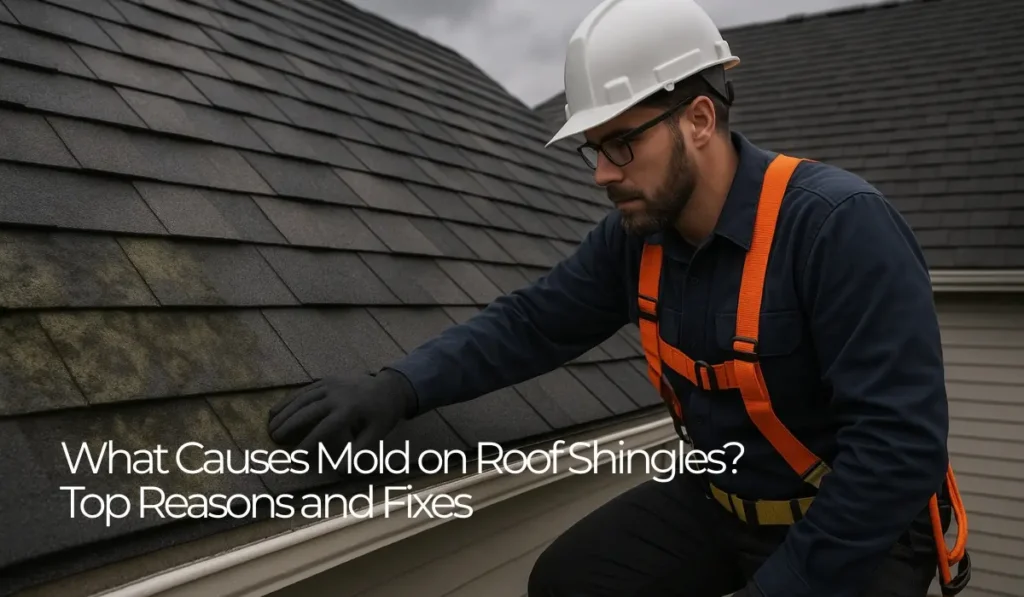
Roof shingle mold reduces curb appeal, shortens roof lifespan, and lowers property value. Mold growth on shingles forms dark streaks and greenish patches that make even new roofs look neglected. If left untreated, mold also weakens roofing materials by holding in moisture, accelerating granule loss and decay.

Homeowners in humid zones or shaded properties often face recurring mold issues. That’s why understanding the root causes, ideal cleaning methods, and long-term prevention strategies is essential for protecting your roof investment.

This guide explains what causes mold on roof shingles, how to fix it, and how to stop it from coming back.

What Is Mold on Roof Shingles?

Mold on roof shingles is a fungal growth caused by moisture retention and organic buildup. It often appears as dark black stains, green fuzzy blotches, or streaky discoloration.

Type
Appearance
Cause

Mold

Black/green fuzzy spots

Organic matter + moisture

Algae

Black/blue streaks

Cyanobacteria (Gloeocapsa magma)

Mildew

Powdery white/gray layer

High humidity, less aggressive

Mold differs from algae and mildew by its thicker spore colonies and deeper root structures. Mold feeds on shingle material itself, particularly in wood or asphalt shingles with cellulose or organic content.

Visual clues include:

  • Dark streaks running down the roof
  • Green or black patches on lower slopes
  • Surface roughness from biofilm buildup

Top Causes of Mold on Roof Shingles

The main causes of roof shingle mold are moisture, shade, and poor ventilation. These conditions create a perfect environment for fungi and algae to thrive.

Common Causes Include:

  1. Moisture accumulation
    • Persistent rain, snowmelt, or high humidity create damp conditions.
    • Water trapped under debris or leaves increases spore activity.
  2. Shade trees and overhangs
    • Tree canopies block sunlight, slowing drying time after rain.
    • Organic droppings (pollen, sap, and leaves) feed mold colonies.
  3. Poor roof ventilation
    • Inadequate attic airflow causes warm, moist air to rise and condense.
    • This encourages attic condensation and traps humidity under the roof deck.
  4. Clogged gutters and downspouts
    • Overflow leads to stagnant water and roof runoff soaking the lower edges.
    • Wet eaves and fascia boards promote microbial growth.
  5. Roof design and orientation
    • North-facing roofs get less sun, holding moisture longer.
    • Low-pitch roofs have slower runoff, leading to water pooling.

Regions & Climates Most Affected by Roof Shingle Mold

Roof shingle mold is most common in warm, humid, and shaded regions.

Region
Mold Risk Level
Climatic Factors

Southeastern U.S.

High

High humidity, rain, and dew point

Pacific Northwest

High

Cloudy, rainy, low sunlight

Gulf Coast States

Very High

Tropical moisture, frequent storms

Midwest (summer months)

Moderate to High

Warm temps with periodic rainfall

Roof orientation also matters. North-facing or heavily shaded roofs dry slower, increasing risk. Coastal homes face salt-laden air and humidity, while inland homes are safer except in humid summers.

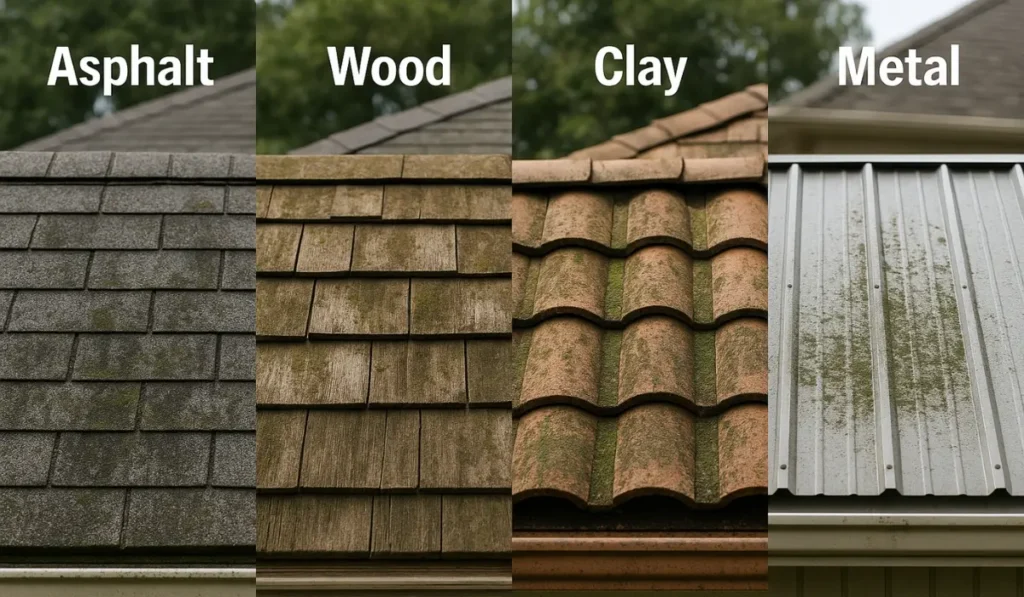
Roof Shingle Materials: Which Are Most Mold-Prone?

Roof Shingle

Asphalt and wood shingles are most vulnerable to mold due to their organic content and porous surface.

Mold Susceptibility by Material:

Shingle Type
Mold Resistance
Key Traits

Asphalt Shingles

Moderate

Granule surface holds moisture

Wood Shingles/Shakes

Low

High cellulose, absorbs water easily

Fiberglass Shingles

High

Resin base resists fungal growth

Architectural Shingles

Moderate-High

Denser layers, some mold resistance

Algae-Resistant Shingles

Very High

Coated with copper/zinc granules

Wood shingles decay faster under mold attack. Fiberglass and metal shingles are more mold-resistant due to their inorganic composition.

How to Remove Mold from Roof Shingles Safely

You can remove mold from roof shingles using soft-wash methods, mold-killing cleaners, and safety precautions.

Recommended Cleaning Steps:

  1. Wear protective gear
    • Use gloves, goggles, and non-slip shoes to avoid injury.
  2. Choose the right cleaner
    • Bleach-based solution (1 part bleach to 3 parts water)
    • Commercial roof cleaners with fungicides
    • Natural options like white vinegar for small spots
  3. Apply with soft-wash system
    • Low-pressure sprayers reduce shingle damage
    • Let the solution dwell for 15–20 minutes
  4. Scrub gently
    • Use a soft-bristle brush for spot cleaning
    • Avoid pressure washing, which strips granules
  5. Rinse thoroughly
    • Use clean water and ensure full chemical removal

Best Products:

  • Spray & Forget Roof Cleaner
  • Wet & Forget Outdoor Mold Remover
  • Zinc or copper strips (installed along ridges to prevent regrowth)

Should You Repair or Replace Mold-Damaged Roof Shingles?

Replace moldy shingles only if cleaning fails or structural damage exists.

Signs You Need Replacement:

  • Granule loss exposing asphalt mat
  • Curling or cupping shingles
  • Visible rot or water underlayment damage
  • Recurrent mold despite repeated cleanings

Roof inspection is crucial. A certified roofing contractor can assess damage under the surface and recommend patching, partial re-roofing, or full replacement. Insurance may cover repairs only if mold is caused by a covered peril, not neglect.

How to Prevent Mold on Roof Shingles Long-Term

Roof Shingle

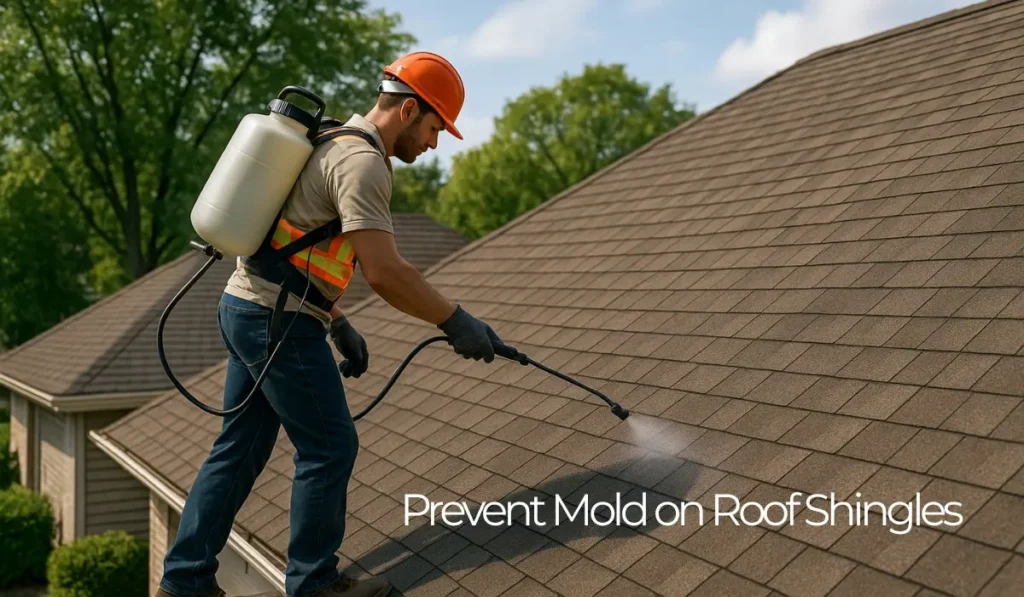
Mold prevention requires moisture control, routine maintenance, and installing mold-resistant materials.

Effective Prevention Tactics:

  • Install zinc or copper strips
    • Rain activates metal ions that kill mold spores.
  • Trim overhanging branches
    • Allow more sunlight and airflow to dry roof faster.
  • Improve attic ventilation
    • Add ridge vents or soffit vents to balance air circulation.
  • Use algae-resistant shingles
    • These contain copper granules to deter biofilm.
  • Clean gutters regularly
    • Ensure proper drainage to reduce standing water.
  • Apply mold-resistant roof sealants
    • These coatings add a moisture barrier to shingle surfaces.

Annual roof inspections help detect early mold signs before they become widespread.

Roof Shingle Mold FAQs (Based on Real Homeowner Concerns)

Can I clean roof shingle mold myself, or should I hire a pro?

Yes, you can clean it yourself with a soft-wash system and mold cleaner. Hire a professional if the roof is steep or damaged or if mold covers a large area.

Does mold reduce the lifespan of roof shingles?

Yes. Mold holds moisture against the shingles, accelerating deterioration, granule loss, and rot. Long-term exposure can reduce roof lifespan by 20–30%.

Are zinc strips really effective for mold prevention?

Yes. Zinc strips release ions that kill fungi and algae when rainwater flows over them. They’re effective for 5–10 years with minimal maintenance.

How often should I inspect for mold?

Inspect the roof at least twice a year—spring and fall. Increase frequency in humid climates or if your roof is shaded.

Is mold on shingles covered by insurance or warranty?

Usually not. Most home insurance policies and warranties exclude mold caused by neglect or lack of maintenance. Coverage applies only if mold results from a sudden, covered event.

Summary of Key Takeaways

  • Mold on roof shingles stems from moisture, poor ventilation, and shade.
  • Asphalt and wood shingles are most susceptible to mold.
  • Cleaning requires soft-washing, mold-killing solutions, and safety gear.
  • Replace shingles only if cleaning fails or structural damage is present.
  • Prevention includes improved airflow, regular maintenance, and zinc barriers.
  • Mold shortens roof lifespan and reduces home value, especially in humid regions.

Want More High-Quality Roofing Projects on Long Island?

G&V Roofing delivers trusted craftsmanship, reliable service, and local expertise that turns property owners into lifelong clients—all from one professional source.

Our Services:

A simple illustration of a hammer with a grey metal head and an orange handle. Slate Roofing— Elegant, long-lasting, and perfect for upscale homes.
A light grey, stylized icon of a classical building with three dark columns and a triangular pediment. Tile Roofing— Durable and stylish roofing built to handle the Northeast climate.
A two-story yellow house icon with a dark gray roof, a red chimney, blue windows, a brown door, and a green base. Residential Roofing— From repairs to full replacements, we protect your home like it’s our own.
A flat, tan-colored icon of a symmetrical building with tall blue windows and a domed center section. Commercial Roofing— Professional-grade roofing systems for businesses and facilities.
A simple light blue water drop icon. Gutters— Proper drainage solutions to protect your foundation and landscaping.
A simple window icon with a brown frame divided into four blue panes by a cross-shaped muntin. Windows Energy-efficient and beautiful—enhance your view and lower utility bills.
A red brick with three circular holes on the top surface, shown in an isometric view. Siding— Boost curb appeal and protect your exterior with high-performance materials.

Learn About:

A white checkmark centered inside a rounded green square.  Choosing the Right Roofing Materials for Long Island Homes
A white checkmark centered inside a rounded green square.  Roofing Tips for Nassau & Suffolk County Weather
A white checkmark centered inside a rounded green square.  How to Spot Roof Damage Before It Becomes Expensive
A white checkmark centered inside a rounded green square.  The Real Cost of Delaying Roof Repairs
A white checkmark centered inside a rounded green square.  Seasonal Roof Maintenance Checklists


A two-story tan house with a gray roof, a red chimney, blue windows, and green trees and bushes on a patch of grass.Looking to Upgrade Your Roof or Protect Your Property Investment?

Whether you’re a homeowner looking for reliable roof solutions or a property manager seeking fast, expert repairs—G&V Roofing is your go-to Long Island partner for long-lasting protection and peace of mind.

A red thumbtack or pushpin angled to the left with a metallic, gray spike.Follow Us for the Latest in Roofing Care, Property Protection & Home Improvement:

Light blue musical note icon. Tiktok : Watch fast transformations, tips from the crew, and roofing secrets revealed
A flat, dark gray icon of a vintage film movie camera with two reels on top. YouTube: Explore step-by-step guides, customer stories, and full project showcases
A stylized black camera icon with a blue lens and a yellow starburst flash effect. Instagram: See beautiful before-and-afters, behind-the-scenes content, and premium materials
A yellow, stylized illustration of a hand giving a thumbs-up gesture. Facebook: Read reviews, see featured jobs, and connect with the local G&V Roofing community

A yellow cartoon-style hand icon pointing to the right.Contact G&V Roofing today and discover why craftsmanship matters
By kaye mori January 14, 2026
What are house siding panels, and why are they important?House siding panels protect exterior walls from moisture, pests, and environmental exposure. They also boost curb appeal and improve a home’s energy efficiency through insulation and thermal resistance. Common House Siding Panel Types and Their Characteristics Siding Type Material Lifespan Maintenance Level Key Features Vinyl PVC-based […]
By kaye mori January 14, 2026
Learn how house siding prevents moisture damage by forming a durable barrier that safeguards your home’s structure, boosts energy efficiency, and supports healthier indoor air. How Does Moisture Affect Your Home’s Structure? Moisture infiltrates the building envelope and causes: Wood rot in structural framing Insulation saturation, reducing thermal performance Degradation of drywall and flooring materials […]
By kaye mori January 14, 2026
Preventative roof maintenance refers to the proactive approach of regularly inspecting and servicing commercial roofing systems to identify and fix minor issues before they escalate into costly problems. Unlike reactive repairs, which are performed after visible damage or leaks occur, preventative roofing maintenance is structured and scheduled and aims to preserve the roof system components […]
Show More →