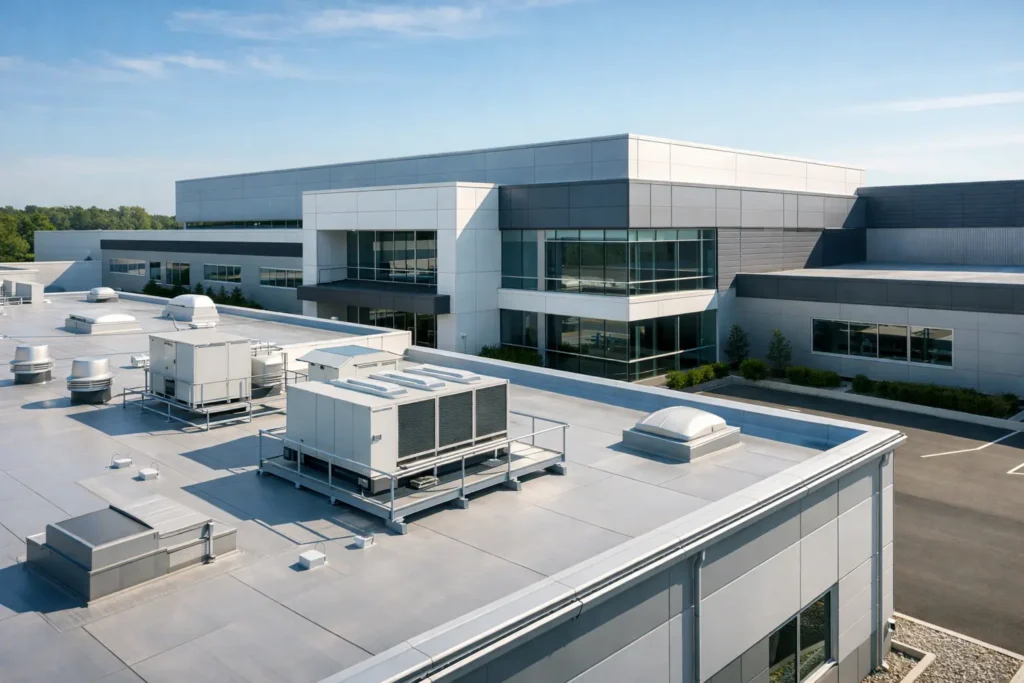
Preventative Roof Maintenance Plans for Commercial Buildings
kaye mori • January 14, 2026

January 14, 2026

Preventative Roof Maintenance

Preventative roof maintenance refers to the proactive approach of regularly inspecting and servicing commercial roofing systems to identify and fix minor issues before they escalate into costly problems.

Unlike reactive repairs, which are performed after visible damage or leaks occur, preventative roofing maintenance is structured and scheduled and aims to preserve the roof system components and the building envelope over time.

Why Is Preventative Roof Maintenance Different from Reactive Roof Repair?

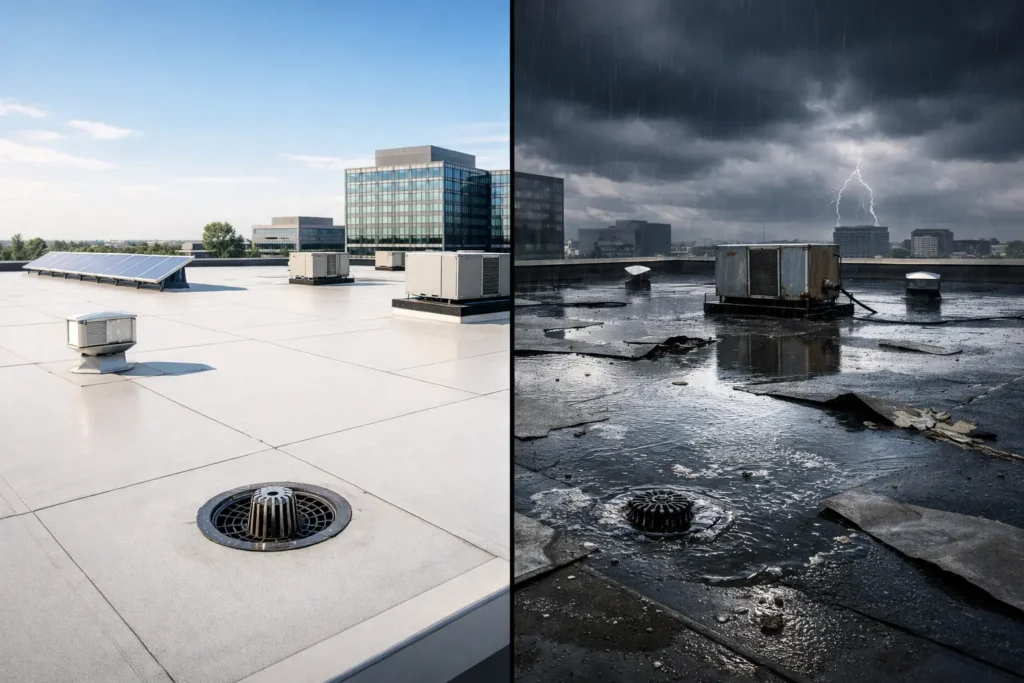
Reactive maintenance deals with urgent issues like leaking roofs or collapsed flashings. This often leads to:

  • Higher emergency repair costs
  • Disrupted building operations
  • Potential insurance claims

In contrast, preventive roof care focuses on:

  • Early damage detection
  • Regular roofing inspections
  • Strategic maintenance scheduling

Why Is It Important for Large Commercial Buildings?

Larger commercial structures have more complex roof systems and critical internal operations. Issues like water ingress can affect HVAC systems, data centers, or valuable inventory. Preventative maintenance helps:

  • Avoid deferred maintenance that leads to structural deterioration
  • Maintain the integrity of commercial roofing
  • Ensure facility management aligns with safety and compliance standards

In the next section, we explore how this proactive approach protects long-term investments and reduces financial risks.

Why Preventative Roof Maintenance Is Crucial for Commercial Buildings

Preventative roof maintenance plays a key role in risk management and cost control for commercial property owners. Skipping maintenance can lead to costly roof replacement or operational downtime.

How Does It Save Money Over Time?

Planned maintenance reduces long-term capital expenditure. Key benefits include:

  • Extending roof life by 30–50% depending on the material
  • Minimizing costly emergency service calls
  • Avoiding large-scale structural damage and tenant relocations

What Risks Are Reduced Through Preventative Roof Maintenance?

A preventative approach avoids several financial and operational risks:

Risk

Prevented By

Emergency leaks

Regular roof inspection and sealing

Lost rental income

Downtime prevention via early detection

Rising HVAC costs

Managing energy performance

Insurance claim disputes

Accurate maintenance logs and inspection reports

How Does It Support Asset Management?

For facility managers, consistent roof care becomes part of broader asset management strategies:

  • Keeps property value stable
  • Supports long-term building operations
  • Ensures better outcomes during insurance claims


Next, we’ll look into what a solid maintenance plan should include—action items, frequency, and reporting.

Key Components of a Preventative Roof Maintenance Plan

A structured preventive service plan includes scheduled tasks and documentation to ensure consistent execution and results.

What Does a Commercial Roof Maintenance Checklist Include?

A good checklist contains:

  1. Scheduled inspections (semi-annual or quarterly)
  2. Debris removal from drains, gutters, and roof surface
  3. Minor repairs such as sealing cracks or tightening flashings
  4. Drainage system checks for clogs or blockages
  5. Documentation of all findings and fixes

What Parts of the Roof Need Regular Attention?

Key roof system components inspected include:

Component

Inspection Focus

Roof drains

Debris blockages, water pooling risks

Flashings

Loose edges, rust, or punctures

Sealants

Cracks, deterioration, UV damage

Roof access points

Safety compliance and structural wear

HVAC penetrations

Proper sealing, rust, and flashing

How Often Should Inspections Be Done?

  • Twice per year is standard (spring and fall)
  • Additional checks after major storms
  • Include leak detection and thermal imaging as part of diagnostics

In the next section, you’ll learn the warning signs that your commercial roof might already be overdue for preventative maintenance.

Signs Your Commercial Building Needs Preventative Roof Maintenance

Preventative Roof Maintenance

Neglecting routine inspections can lead to both visible and hidden damage. Early detection through regular checks is essential.

What Are Visual Indicators of Roof Wear?

Be alert to:

  • Water stains on ceilings or interior walls
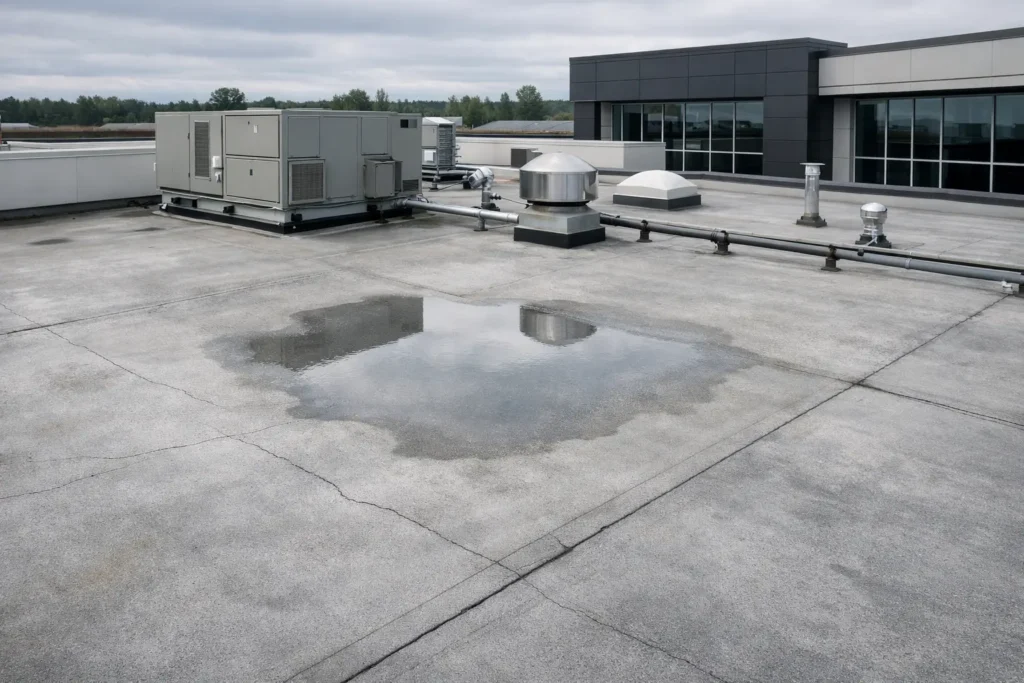
  • Ponding water on the roof surface after rain
  • Sagging areas or soft spots in the roofing membrane
  • Ceiling discoloration from moisture infiltration
  • Cracks, blistering, or seam separation on the surface

What Hidden Problems Should You Watch For?

Use professional inspections to uncover issues like:

  • Energy loss due to insulation damage
  • Ventilation blockages leading to condensation
  • Undetected leaks revealed by infrared inspection
  • Compromised membranes from thermal cycling

Next, discover the best practices for setting up a sustainable, trackable, and effective preventative roof care program.

Best Practices for Implementing Preventative Roof Maintenance Programs

Creating a proactive maintenance program ensures consistent results and aligns with both facility management goals and roof warranty requirements.

Who Should Manage Roof Maintenance?

Engage a licensed commercial roofing contractor with:

  • Verified credentials and insurance
  • Strong track record with building engineers and large facilities
  • Knowledge of compliance standards and warranty conditions

What Tools and Practices Improve Maintenance Execution?

  • Use preventive maintenance software for tracking work orders
  • Maintain digital inspection reports and maintenance logs
  • Implement a maintenance calendar to automate scheduling
  • Coordinate with property managers for budget and access
  • Ensure proper documentation practices for warranty validation

Why Is Documentation So Important?

Good record-keeping supports:

  • Regulatory compliance
  • Roof warranty coverage
  • Budget allocation and cost tracking

Curious about the cost side of things? 

The next section compares planned maintenance with emergency repairs.

Cost of Preventative Roof Maintenance vs. Emergency Repairs

Preventative Roof Maintenance

Preventative roof maintenance consistently shows a high ROI when compared to unplanned, reactive repairs. Many property managers underestimate the long-term costs of neglect.

What Are the Cost Differences?

Scenario

Average Cost

Preventative maintenance

$0.05 – $0.25 per sq. ft. annually

Emergency roof repair

$3–$10 per sq. ft. (plus downtime)

Full roof replacement

$8–$20 per sq. ft. or more

What Makes Emergency Repairs More Expensive?

  • After-hours service fees
  • Equipment damage or mold remediation
  • Potential disruption to tenants or operations
  • Voided warranties due to lack of maintenance logs


Is Preventative Roof Maintenance Worth the Investment?

Yes. Real estate portfolios that implement routine roof maintenance typically reduce long-term repair and replacement costs by up to 50%. It also improves budget forecasting and lowers the risk of sudden failure costs.

In the final section, we’ll cover frequently asked questions to clear up common uncertainties.

FAQs About Preventative Roof Maintenance for Commercial Buildings

How Often Should Preventative Roof Maintenance Be Done?

Twice per year is standard. Additional checks are recommended after storms or extreme weather events. Frequency may vary based on roof type and age.

Which Roof Types Benefit Most?

Flat roofs, metal roofs, and low-slope commercial roofs benefit the most. These systems are prone to pooling water, seam separation, and UV damage.

Is Preventative Roof Maintenance Required for Warranty?

Yes, most roofing warranties require documented routine inspections and upkeep. Missing these steps can void coverage.

Can In-House Teams Perform Inspections?

Basic checks can be done in-house, but full inspections should be done by certified professionals. DIY inspections often miss early-stage roof damage indicators.

What Should Be Included in a Roof Maintenance Program?

  • Inspection timeline
  • Documentation system
  • Licensed contractor
  • Leak detection protocols
  • Compliance tracking

Want More High-Quality Roofing Projects on Long Island?

G&V Roofing delivers trusted craftsmanship, reliable service, and local expertise that turns property owners into lifelong clients—all from one professional source.

Our Services:

A simple icon of a grey metal hammer with an orange handle. Slate Roofing— Elegant, long-lasting, and perfect for upscale homes.
A classical-style stone building icon with a triangular roof, a pediment, and four columns, commonly used to represent a bank. Tile Roofing— Durable and stylish roofing built to handle the Northeast climate.
A two-story yellow house icon with a red chimney, blue windows, a brown door, and a green base. Residential Roofing— From repairs to full replacements, we protect your home like it’s our own.
A flat, stylized icon of a symmetrical, beige office building with blue windows and a grey foundation. Commercial Roofing— Professional-grade roofing systems for businesses and facilities.
A simple, light blue water droplet icon on a white background. Gutters— Proper drainage solutions to protect your foundation and landscaping.
A square brown window frame divided into four panes of blue glass with a light reflection. Windows Energy-efficient and beautiful—enhance your view and lower utility bills.
An isometric view of a standard red clay brick with three circular holes along the top. Siding— Boost curb appeal and protect your exterior with high-performance materials.

Learn About:

A white checkmark centered on a rounded, light green square background.  Choosing the Right Roofing Materials for Long Island Homes
A white checkmark centered on a rounded, light green square background.  Roofing Tips for Nassau & Suffolk County Weather
A white checkmark centered on a rounded, light green square background.  How to Spot Roof Damage Before It Becomes Expensive
A white checkmark centered on a rounded, light green square background.  The Real Cost of Delaying Roof Repairs
A white checkmark centered on a rounded, light green square background.  Seasonal Roof Maintenance Checklists

A two-story yellow house with a gray roof, a red chimney, blue windows, and green landscaping.Looking to Upgrade Your Roof or Protect Your Property Investment?

Whether you’re a homeowner looking for reliable roof solutions or a property manager seeking fast, expert repairs—G&V Roofing is your go-to Long Island partner for long-lasting protection and peace of mind.

A red plastic pushpin with a sharp metal tip, depicted at an angle on a white background.Follow Us for the Latest in Roofing Care, Property Protection & Home Improvement:

A light blue, stylized musical note icon. Tiktok : Watch fast transformations, tips from the crew, and roofing secrets revealed
A dark gray icon of a vintage film camera with two circular film reels on top. YouTube: Explore step-by-step guides, customer stories, and full project showcases
A dark grey camera icon with a bright yellow star-shaped flash bursting from the top left corner. Instagram: See beautiful before-and-afters, behind-the-scenes content, and premium materials
A yellow, cartoon-style thumbs-up icon representing approval or agreement. Facebook: Read reviews, see featured jobs, and connect with the local G&V Roofing community

A yellow cartoon hand with its index finger pointing to the right.Contact G&V Roofing today and discover why craftsmanship matters
By kaye mori January 14, 2026
What are house siding panels, and why are they important?House siding panels protect exterior walls from moisture, pests, and environmental exposure. They also boost curb appeal and improve a home’s energy efficiency through insulation and thermal resistance. Common House Siding Panel Types and Their Characteristics Siding Type Material Lifespan Maintenance Level Key Features Vinyl PVC-based […]
By kaye mori January 14, 2026
Learn how house siding prevents moisture damage by forming a durable barrier that safeguards your home’s structure, boosts energy efficiency, and supports healthier indoor air. How Does Moisture Affect Your Home’s Structure? Moisture infiltrates the building envelope and causes: Wood rot in structural framing Insulation saturation, reducing thermal performance Degradation of drywall and flooring materials […]
By kaye mori January 13, 2026
What causes slipping tile roofs, and how can you detect early signs?Slipping roof tiles occur due to poor installation, structural failure, or long-term environmental exposure. Early detection helps prevent severe damage and costly repairs. Main Causes of Slipping Tile Roofs Tile movement often results from a combination of physical forces and material fatigue. The most […]
Show More →